The phrase however is one among seven phrases which might be often called coordinating conjunctions. One key rule of grammar is that coordinating conjunctions that hyperlink unbiased clauses should have a comma earlier than them. If a coordinating conjunction is linking something else, it doesn't want a comma. If you discover a run-on sentence and discover the place the 2 unbiased clauses "collide," one can resolve how preferable to separate the clauses. Fixing run-on sentences is the same as fixing comma splices.

You could make two finished sentences by inserting a period. You can use a semicolon between the 2 clauses if they're of equal importance; this enables your reader to think about the factors together. You can use a semicolon with a transition phrase to level a selected relation between the 2 clauses; however, it's best to use this sparingly. You can use a coordinating conjunction and a comma, and this additionally will level out a relationship. Or, you are able to add a phrase to at least one clause to make it dependent. Once you uncover the place the 2 unbiased clauses are "spliced," there are a number of techniques to separate them.

You can use a coordinating conjunction following the comma, and this additionally will point out a relationship. One of the needs of the comma is to stability in parallel parts of like which means and form. A compound sentence accommodates two or extra unbiased clauses linked by a coordinating conjunction. Independent clauses are people who can stand alone as accomplished sentences.

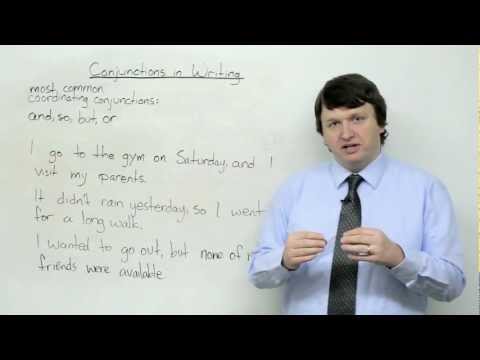
The commonest coordinating conjunctions are and, but, and or. In sure cases, nor, yet, so, and for act as coordinating conjunctions. For further information on coordinating conjunctions, click on HERE. See the observe BELOW concerning using a comma between two unbiased clauses when the second unbiased clause begins with a parenthetical factor or adverbial clause.

Note that not all commas are equally up for debate. Many comply with instantly from the grammar of the sentence, comparable to people who distinguish between restrictive and nonrestrictive components in a sentence. But this comma that is available in to demarcate two unbiased clauses is fully elective — in all contexts — if these two clauses are brief and intently related. Beyond that, in fiction, if you're going for a specific voice, a specific effect, it's completely permissible to omit this comma even with for a lot longer structures.

You'll see that strategy extra with some authors than others. The phrases for, and, nor, but, or, yet, and so are the seven coordinating conjunctions. However, coordinating conjunctions don't use commas all the time. If a coordinating conjunction is connecting a factor in addition to unbiased clauses, it doesn't want a comma. Commas can even be part of unbiased clauses so lengthy because the comma is adopted by a coordinating conjunction . In this case, a semicolon could substitute the comma.

An unbiased clause is a unit of grammatical company that features equally a subject matter and verb and might stand by itself as a sentence. In the past example, "I went running" and "I noticed a duck" are equally unbiased clauses, and "and" is the coordinating conjunction that connects them. A comma shows a pause between the ending of an introductory word, phrase, or clause, and the start of the primary component of the sentence. The commonest introductory phrase teams are clauses or phrases which operate as adverbs, telling how, why, when, where, or underneath what situations a factor happened. Other introductory parts might contain prepositional phrases, adjective clauses or phrases, participial phrases, infinitive phrases, and transitional expressions.

There are two unbiased clauses here, joined by the coordinating conjunction but. Although it will finish in a extra stilted writing style, every might stand individually as a sentence and nonetheless be correct. Contending that the coordinating conjunction is sufficient separation, some writers will omit the comma in a sentence with short, balanced unbiased clauses . If there's ever any doubt, however, use the comma, because it can be usually right on this situation. In an open punctuation style many sorts of commas are candidates for omission. Commas between unbiased clauses joined by a coordinating conjunction can be amongst the many first to go.
Although this coordinating conjunction conjoins two unbiased clauses, they're brief and intently related. And including within the comma would change the form of the bigger structure. It's there additionally to name out this balanced relationship between the 2 clauses. Using it represents the baseline and impartial approach. When you insert a comma between unbiased clauses, it have to be accompanied by considered one of many coordinating conjunctions. Coordinating conjunctions are conjunctions, or becoming a member of words, which are positioned between phrases and phrases of equal importance.

Used with coordinating conjunctions, commas enable writers to precise how their finished ideas relate to at least one another. They additionally assist dodge the choppy, flat type that arises when each thought stands as a separate sentence. A subordinating conjunction is a conjunction that connects an unbiased clause with a dependent clause.

A subordinate clause can't stand by itself, and in contrast to coordinating conjunctions, subordinating junctions don't comply with commas. Subordinating conjunctions could very nicely be robust to know and are almost certainly a serious purpose for the confusion surrounding commas and conjunctions. If you would like assistance understanding subordinating conjunctions, we now have a superb information to them. The seven coordinating conjunctions are for, and, nor, but, or, yet, and so. If any of those seven phrases are connecting unbiased clauses, they want to have a comma earlier than them. Though not unavoidably mechanical, using commas in lists is nicely established.
In this usage, the comma separates a collection of words, phrases, or unbiased clauses. Commas might possibly be utilized to separate unbiased clauses, however with the addition of a coordinating conjunctions . Another chance is that a author is punctuating by ear, counting on the previous concept that you simply put a comma the place you're taking a breath.

Since however alerts a disjunction, a author may think a pause and insert a comma on that basis. But punctuation isn't decided solely by pauses heard in our psychological ear. If pausing is the idea for the comma after but, we're handling a false underlying assumption resulting in an error. "She likes the pink ones best" has a subject, verb, and object.

It is feasible to write, "She has three pairs of shoes. She likes the pink ones best." Instead of writing the 2 sentences separately, we will be a part of them with a coordinating conjunction. When you give an individual a alternative between two things, you don't should use a comma after "or." For example, "Would you want Coke or 7Up? " The comma is required when there are two unbiased clauses joined collectively by a coordinating conjunction just like those on this lesson.

As you could recall from above, an unbiased clause has a subject matter and a verb and might stand by itself as a sentence. Often, a coordinating conjunction will be part of two unbiased clauses — just like the phrase "but." Use a semicolon to exchange a comma while you employ a coordinating conjunction to hyperlink unbiased clauses that already comprise commas. I was taught that including a comma earlier than a conjunction that joins unbiased clauses is unbreakable law.

I see this rules damaged all of the time, notably in literature, and now in my younger kid's homework studying assignments. I suppose I inconvenienced a beloved writer by including in all of the lacking commas, and now I really feel insufferably pompous and maybe ignorant about this rule. You state above that the commas could be omitted if the sentence is obvious even with no them. This was true within the case of the writer whose work I read. Writers may give readers facts that limits or in any different case modifies a major concept that follows.
To do so, writers can use introductory phrases or introductory phrases. These introductory parts would be one phrase or several. Common introductory parts embrace transition phrases and statements about time, place, manner, or condition. A comma is generally positioned earlier than a coordinating conjunction that joins two unbiased subject-verb clauses—that is, clauses that would stand on their very very own as accomplished sentences.

Sometimes two brief and intently associated unbiased clauses usually are not interrupted with a phrase or clause, however rather one precedes or follows. You would come with the comma between the 2 unbiased clauses or not relying upon the specified impact of the whole. Mouse-over the commas for a pop-up explanation.

Click on the commas for additional rationalization of the principles of comma utilization being used. If your computing device is provided with PowerPoint, click on on the PowerPoint icon to the perfect for a quick PowerPoint presentation on comma usage. Use a comma to separate the weather in a collection , which include the final two. "He hit the ball, dropped the bat, and ran to first base." You could have discovered that the comma earlier than the "and" is unnecessary, which is ok within the event you are answerable for things. However, there are conditions when, within the event you do not use this comma , these final two gadgets within the record will attempt to glom jointly . Using a comma between all of the gadgets in a series, which include the final two, avoids this problem.

This final comma—the one between the phrase "and" and the previous word—is generally referred to because the serial comma or the Oxford comma. In newspaper writing, incidentally, you might seldom discover a serial comma, however that isn't essentially an indication that it ought to be omitted in educational prose. A sentence can start with BUT and AND or another coordinating conjuction and so lengthy because the sentence comprises a topic and verb it's an entire sentence. It can even start with a traditional conjunction furnished that it initiates a dependent clause which is observed by an unbiased clause which is separated by a comma. It acquired a semi-colon earlier than and a comma after whether it's becoming a member of two unbiased clauses. If not becoming a member of clauses, it's handled as an adverb and could or not want a comma counting on what it modifies and the place it falls within the sentence.

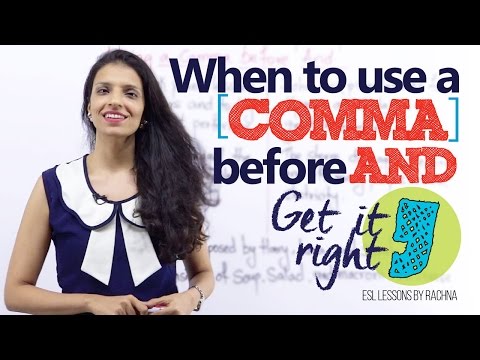
Does So Always Need A Comma After It The comma features as a software to point to readers a convinced separation of words, phrases, or options for you to stop misreading the writer's meant meaning. When a sentence is spoken aloud, a comma commonly represents a pause, which in verbal dialog features to make clear meaning. The comma is used in response to unique regulations that relate to grammatical buildings inside the sentence. Consistency in using commas permits the reader to be assured of suitable interpretation of the writer's intentions. A comma is required in a sentence earlier than the conjunctionsand, but, for, nor, yet, or, soto separate the 2 unbiased clauses.

Commas are among the continuously used punctuation marks within the English language - they're additionally among the misused. Commas signify a pause between totally different components of a sentence, making the which means clearer and the writing less complicated to read. Despite being comparatively straightforward to understand, it usually is puzzling deciding when to make use of them, with a lot of persons inserting them all because of their textual content with no figuring out the right rules. Use a semicolon to hitch two associated unbiased clauses instead of a comma and a coordinating conjunction . Make yes if you employ the semicolon that the connection between the 2 unbiased clauses is obvious with no the coordinating conjunction.

Use a semicolon to hitch two associated unbiased clauses instead of a comma and a coordinating conjunction. When a coordinating conjunction joins two unbiased clauses, a comma is used earlier than the coordinating conjunction . When becoming a member of two unbiased clauses, or clauses that would stand on their very very own as full sentences, place a comma earlier than the conjunction. If the second unbiased clause is quite short, or whether it can be an imperative, the comma might be omitted.

When you're writing an inventory of nouns, verbs, or another a half of speech, you'll must incorporate commas to separate them. The similar goes for an inventory of phrases and clauses. A complicated sentence accommodates an unbiased clause and a number of dependent clauses. A dependent clause, in contrast to an unbiased clause, can't stand by itself as an entire sentence. The conjunctions and prepositions mostly used to introduce a dependent clause comprise if, because, while, as, although, since, and unless.

A hassle-free sentence consists of just one unbiased clause and no dependent clauses. When an easy sentence consists of a conjunction, you would possibly be tempted to insert a comma earlier than the conjunction, as you do with a compound sentence. With an easy sentence, however, the overall rule is to omit the comma.
Some phrases, clauses, and phrases interrupt the circulation of a sentence and will be enclosed in commas. Examples of those interrupters are conjunctive adverbs, transitional phrases, and names in direct address. If the 2 unbiased clauses are brief and intently related, it's possible you'll use a comma or omit it, counting on whether or not or not you need to point a pause.
Generally, once you enroll in unbiased clauses with a coordinating conjunction, insert a comma earlier than the conjunction. As you study commas, first, acknowledge that they signal a pause; second, know which regulations will be bent with no deceptive your reader. Commas are some of the most often used inner punctuation in sentences, and different folks have extra questions on them than about another punctuation mark. One purpose is that diverse editors have diverse opinions about when a comma is needed.
You're more probable to examine one ebook through which commas abound, whereas in yet another text, they're scarce. A comma splice occurs whenever you be a part of two unbiased clauses with a comma in preference to a conjunction or different proper punctuation like a semicolon. Both clauses are unbiased and will stand on their very very own as comprehensive sentences. When they're joined within the identical sentence, however, they need to be related with a comma and a coordinating conjunction. Commas are needed earlier than a coordinating conjunction that separates two unbiased clauses.
If the unbiased clauses aren't joined by a conjunction, i.e., and, or, nor, but, etc., then the right mark is the semicolon (;), see extra beneath . The overarching precept is that a comma needn't be used between two brief and intently associated unbiased clauses, period. This is usually much extra so the case when that unit of two is interwoven in varied techniques with different structures. Here, the 2 unbiased clauses inside the shape are brief and intently related.
If they stood on their own, you would possibly use the comma or not, relying upon the phrasing that was wanted. The comma between the unbiased clauses, not crucial right right here for comprehension, is suppressed for rhythm and pacing. Suppressing it offers the phrase enclosed in commas — now the one commas within the development — higher weight, which in turns offers the sentence higher lyricism. Even have been the rest of the piece to make use of this standard comma, it will be advantageous to go away it out here. (i.e., one with two unbiased clauses joined by the conjunction but), the rule for which is to insert a comma earlier than the conjunction. You must normally have a comma earlier than FANBOYS that enroll in two unbiased clauses .